



Bangladesh: Voting ends, 47.9% turnout till 2 pm in first polls since Sheikh Hasina’s ouster
The country is also holding a referendum on the National Charter, a document drafted by Mohammad Yunus’ interim government.
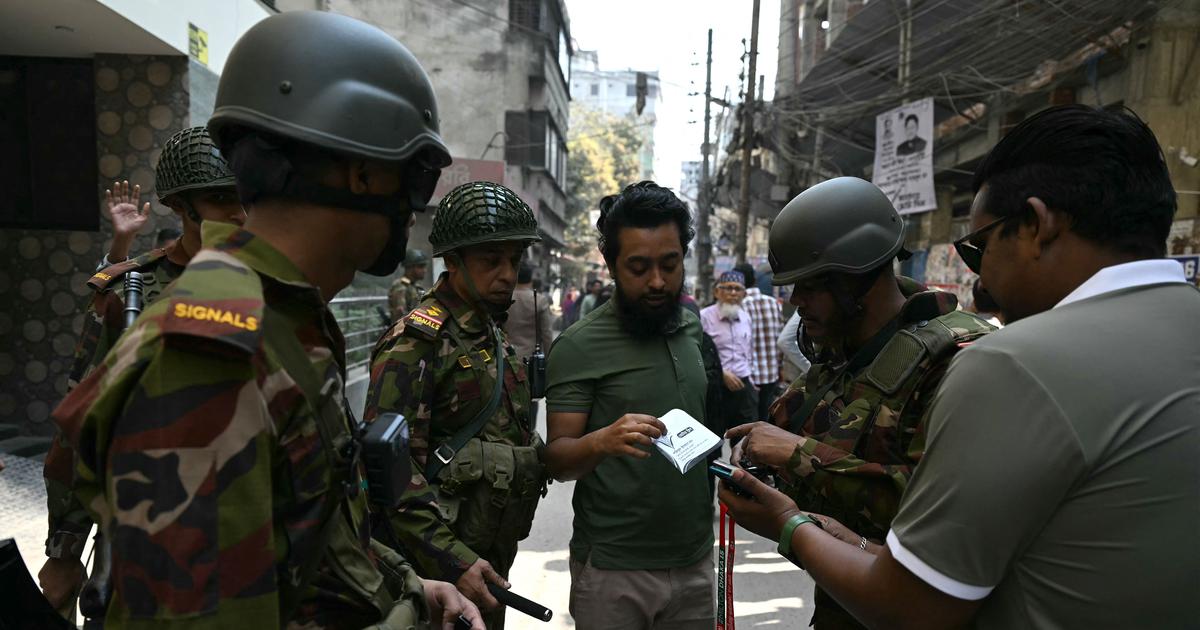
Voting in Bangladesh’s national election was held on Thursday, the first since former Prime Minister Sheikh Hasina’s government was ousted following widespread protests in 2024.
A turnout of 47.9% was recorded till 2 pm, The Daily Star quoted the country’s Election Commission as saying.
Polling began at 7.30 am local time and concluded at 4.30 pm local time. The counting of votes began soon after, with early trends expected around midnight and final results likely by Friday morning, Reuters quoted Election Commission officials as saying.
Nearly 128 million persons are registered to vote, 49% of them women. However, only 83 female candidates are contesting. Almost half of the electorate is between 18 years old and 35 years old, many of them first-time voters, Reuters reported.
Voting took place in 299 constituencies. Polling in one constituency in the northern district of Sherpur was postponed because a candidate died during the campaign, Al Jazeera reported.
More than 90% of the country’s 42,779 polling centres are under security camera coverage, with drones and body-worn cameras deployed for the first time in a national vote, Al Jazeera had quoted Election Commissioner Abul Fazal Mohammad Sanaullah as saying.
Nearly 9.5 lakh security personnel have also been deployed nationwide.
Chief Election Commissioner AMM Nasir Uddin on Thursday said that the election was progressing in a free and fair manner, The Daily Star reported. “A few untoward incidents were reported outside polling centres, which are not significant,” Uddin was quoted as saying.
#WATCH | Bangladesh: Long queues of voters witnessed at a polling centre at the Gulshan Model School and College in Dhaka. Security has been tightened outside the polling centre.
— ANI (@ANI) February 12, 2026
Voting for the 13th Parliamentary elections begins. pic.twitter.com/DQTqJlTxyv
In this election, two coalitions led by former allies, the Bangladesh Nationalist Party and Islamist outfit Jamaat-e-Islami are in direct contest.
Besides the parliamentary election, the country is holding a referendum on the National Charter 2024, which is a document drafted by the interim government led by Mohammad Yunus, setting a framework for future governance, Al Jazeera reported.
Yunus, a Nobel laureate economist, took over as chief adviser of Bangladesh’s interim government three days after Hasina fled to India on August 5, 2024. Hasina fled after several weeks of widespread student-led protests against her Awami League government. She had been in power for 16 years.
Yunus had pledged to step down once an elected government took office.
Yunus, BNP leader Tarique Rahman and Jamaat-e-Islami chief Shafiqur Rahman cast their votes on Thursday.
Yunus said that through the election, the people of Bangladesh had “rejected the past”, ANI reported.
Polling day violence
The Bangladesh Nationalist Party on Thursday alleged that its Khulna city leader Mohibuzzaman Kochi died after being attacked by members of the Jamaat, Prothom Alo reported.
Kochi was attacked after he objected to some persons canvassing inside a polling centre. He was allegedly pushed, due to which he fell and hit his head. He was taken to hospital, where the doctors declared him dead.
The newspaper quoted the Jamaat’s centre director as having told reporters that supporters of the Bangladesh Nationalist Party had been forcing Jamaat’s women activists out of the polling venue. The director added that Kochi had fallen during the commotion and that he had not been pushed or assaulted.
In Gopalganj, three persons were injured in a crude bomb explosion at a polling centre, The Daily Star reported. However, voting at the centre continued normally, the newspaper quoted the police as saying.
VIDEO | Bangladesh Elections 2026: Interim government chief Muhammad Yunus arrives to cast his vote at a polling booth in Dhaka.#BangladeshElections2026 #Dhaka
— Press Trust of India (@PTI_News) February 12, 2026
(Full video available on PTI Videos - https://t.co/n147TvrpG7) pic.twitter.com/Zw7xslzXMd
‘Farcical election,’ says Sheikh Hasina
On the other hand, Hasina described the election as “farcical” and “unconstitutional” after the polling concluded and thanked Bangladeshi citizens for rejecting the polls, which were conducted without the participation of her party, the Awami League.
“Today’s so-called election by Yunus, who seized power illegally and unconstitutionally, was essentially a well-planned farce,” read the statement shared by the Awami League.
It added: “The people’s voting rights, democratic values, and the spirit of the Constitution were completely disregarded in this deceptive, voter-less election.”
The party also put forward a series of demands, including the cancellation of the elections and Yunus’ resignation. The revocation of the suspension on Awami League activities and release of all political prisoners was also among the demands.
A tense election
The last elections in the country were held in January 2024, when Hasina returned to office for a fourth consecutive term. The Awami League had won 222 out of the 300 elected seats in Parliament. The election had been boycotted by her main rivals, who accused her administration of rigging the electoral process.
In May, the interim government banned all activities of the Awami League, including its online platforms, under the country’s anti-terrorism act.
Hasina had in October described the decision as unjust and warned that it could undermine the legitimacy of the vote. She also warned that millions of her supporters would boycott the general election unless her party were allowed to participate.
In February 2025, a United Nations report said that the Hasina government was behind systematic repression and killings of the protesters in 2024, saying that the abuses could amount to “crimes against humanity”.
The report said that the Hasina government, the country’s security and intelligence services and “violent elements” associated with the Awami League had “systematically engaged in a range of serious human rights violations” during the agitation in 2024.
Of the 1,400 killed and thousands injured between July 1, 2024, and August 15, 2024, the vast majority were shot by Bangladesh’s security forces, the UN report said. Of these, 12% to 13% killed were children.
On November 17, Hasina was sentenced to death after the country’s International Crimes Tribunal found her guilty of crimes against humanity for the deadly crackdown on the protests.
The verdict was the first in a series of four cases related to crimes allegedly committed during her government’s response to the protests.
Hasina, however, described the tribunal as biased and politically motivated, and denied having ordered firing on protestors.
Also Read:
- Bangladesh’s Gen-Z leaders brought down an autocrat – so why are they so glum before elections?
- How Bangladesh’s embattled Hindus are going to vote in the first post-Hasina elections
